Next Guest Speaker: HAP KLOPP

HAP KLOPP este fondatorul și CEO-ul timp de peste 20 de ani al The North Face, transformed the company into a globally recognized benchmark brand in the outdoor industry. Following that experience, he founded HK Consulting, a private consulting firm specializing in strategy, global business, marketing, and sales for companies in the sports, apparel, and financial services sectors.
He is also a lecturer and motivational speaker, sharing his expertise in leadership and entrepreneurship. He serves on the boards of several entrepreneurial ventures and has been Chairman of Daytrip since 2019.
Hap Klopp is the author of Conquering The North Face: An Adventure in Leadership and ALMOST: 12 Electric Months Chasing a Silicon Valley Dream. His expertise spans strategy, brand building, mergers and acquisitions, and corporate finance, developed through extensive international experience.
HAP KLOOP 26.10.2026-01.11.2026
Hap Klopp is an entrepreneur, business leader, academic, and explorer, internationally recognised as the founder of The North Face, where he served as President and Chief Executive Officer for two decades. Under his leadership, the company evolved into a global leader in the outdoor apparel and equipment industry, distinguished by its commitment to innovation, product excellence, and outstanding management practices. Following the success of The North Face, Klopp founded HK Consulting, an international management consulting firm, and has since advised, invested in, and served on the boards of numerous entrepreneurial ventures across sectors including healthcare, sustainability, and biotechnology. An internationally acclaimed keynote speaker, he has delivered lectures at leading universities, multinational organisations, and global conferences on leadership, entrepreneurship, innovation, and the future of work. He currently serves as an Adjunct Professor at prestigious academic institutions, including the University of California, Berkeley, and Hult International Business School, where he is actively engaged in research and executive education programmes focusing on organisational transformation and the future of work. Klopp is also the author of Conquering The North Face: An Adventure in Leadership and ALMOST: 12 Electric Months Chasing a Silicon Valley Dream, publications that reflect his extensive expertise in leadership, entrepreneurship, innovation, and organisational development. Conquering: The North Face, an Adventure in Leadership and Almost – 12 Electric Months Chasing a Silicon Valley Dream. Through his work as an entrepreneur, educator, investor, and explorer, he continues to inspire new generations of innovators and business leaders.
Building Your Brand
The workshop will begin with an introductory lecture during which students will discover and explore how their passions, values, experiences, knowledge, and personal skills can be integrated into an authentic, coherent, and relevant personal and professional brand that supports their career development. Drawing on concrete examples and situations encountered in professional settings, participants will examine the importance of identifying their strengths and the elements that differentiate them from others. They will be guided to reflect on questions such as: “Who am I?”, “What can I do?”, “What makes me different?” and “What value can I bring?” During the practical part of the workshop, students will work individually to define their own value proposition and develop a short, clear, and compelling professional pitch through which they can communicate who they are, what they can offer, and how they can position themselves effectively in a professional context. The workshop will conclude with a constructive feedback session from both peers and the facilitator, helping students evaluate and improve their message, presentation style, and strategy for building their personal brand.
26.10.2026, Room A1, 12.00-13.30
26.10.2026, Room 120, 13.40-16.00
Adopting the Right Mindset
Workshopul este dedicat dezvoltării unui mindset flexibil, orientat spre adaptare, învățare continuă și identificarea oportunităților într-un context economic și social aflat într-o transformare accelerată. Studenții vor analiza principalele tendințe care modelează economia și societatea contemporană și vor explora modul în care incertitudinea, eșecul, evenimentele de tip Black Swan și megatendințele pot fi privite nu doar ca surse de risc, ci și ca puncte de plecare pentru inovare, dezvoltare și noi oportunități. Prelegerea și discuțiile interactive vor continua cu workshopul „The Future of Leadership”, care îi va provoca pe studenți să privească dincolo de modelele tradiționale de leadership și să își imagineze cum se va transforma rolul liderului între 2030 și 2050. Pornind de la schimbările demografice, tehnologice, climatice și geopolitice care vor influența organizațiile viitorului, echipele vor construi scenarii și perspective asupra modului în care vor arăta liderii, echipele și organizațiile într-un mediu tot mai dinamic și imprevizibil. Participanții vor fi încurajați să gândească critic și creativ, să conecteze tendințele actuale cu posibile evoluții viitoare și să propună strategii prin care liderii să poată transforma incertitudinea în avantaj competitiv.
27.10.2026, Room 120, 12.00-15.00
Finding the Opportunities
The workshop challenges students to develop their “sense” for opportunities and learn to recognize business potential where others may see only ordinary problems. Building on the skills required in the AI era, participants will explore the difference between problem spotting and problem solving, and discover why, in a world where technology can rapidly generate solutions, the ability to identify the right problem is becoming a critical competitive advantage. Through observation, critical thinking, and perspective-taking exercises, students will be encouraged to question things that society has come to take for granted and ask themselves: “What needs exist that are not yet being addressed?” As part of the Breakout Challenge – “Finding Hidden Truths”, teams will explore areas such as healthcare, nutrition, mobility, and housing to identify “hidden truths” – behaviors, frustrations, needs, or seemingly ordinary problems that may conceal genuine opportunities for innovation and business. The challenge will continue with transforming these insights into concrete ideas for products, services, or business models, with a focus on the relevance of the problem, the creativity of the solution, and its potential impact. The experience will conclude with a pitching session, where teams will present their discoveries, defend their ideas, and demonstrate how a simple observation can become the starting point for a meaningful business opportunity.
28.10.2026, Room 120, 12.00-15.00
Creating the Opportunity
The final day is dedicated to transforming ideas into concrete visions for the future and challenges students to think beyond conventional solutions. Participants will explore business models and counterintuitive solutions, learning how to approach problems from unexpected perspectives and how to turn current changes and challenges into opportunities for innovation. The Breakout Challenge – “Envisioning the Future” takes this challenge one step further, inviting teams to imagine what the world of tomorrow might look like and how artificial intelligence will transform industries, organizations, and traditional business models. Starting from areas such as healthcare, nutrition, mobility, and housing, students will develop innovative products, services, and experiences designed to address the needs of the future. At the same time, they will examine the impact of AI on how organizations will operate, the role of leaders, and the relationship between people and technology. They will explore not only what technology can do, but also what it should do in order to create meaningful value. The ideas and scenarios developed will be presented during “Presentations – Vision of the Future”, a pitching session in which teams will turn their imagination into a coherent and compelling vision of the future.
29.10.2026, Room 120, 12.00-15.00
To reserve your seat for the courses, please fill in the the form.
* All students who attend the courses will receive a certificate of participation; also, the professor will award three certificates for outstanding achievements.

Cordelia Mason 11.11.2026-21.11.2026

Prof. dr. Cordelia Mason is a professor of Management and Entrepreneurship at Universiti Kuala Lumpur (UniKL) and an internationally recognised expert in entrepreneurship, strategic management, innovation, and the future of work. With more than three decades of experience in academia and university leadership, she has held senior positions including Dean, Deputy Dean, Director of Strategy, and Chief Executive Officer of Yayasan UniKL, playing a key role in advancing entrepreneurship education and institutional innovation. Her research and consultancy focus on entrepreneurship, social entrepreneurship, sustainability, artificial intelligence, Technical and Vocational Education and Training (TVET), financial education, and future workforce skills development. As a consultant and expert, she has collaborated with international organisations such as UNESCO-UNEVOC, the United Nations Development Programme (UNDP), and the Asian Institute of Chartered Bankers, contributing to educational policy initiatives, curriculum development, and the promotion of entrepreneurial ecosystems. The author of numerous scholarly publications and case studies, Professor Dr Cordelia Mason is a dedicated advocate for innovation, leadership, and sustainable development, inspiring new generations of entrepreneurs and leaders through her academic and professional contributions.
Identification and Analysis of Social Problems in an International Context
The workshop aims to develop students’ ability to identify and analyze relevant social problems from a local, European, and international perspective. The activities focus on introducing the principles of social entrepreneurship, defining and formulating a concrete social problem, analyzing its root causes, and identifying the main categories of beneficiaries and stakeholders involved. An important component is the integration of an intercultural and international dimension by relating the identified problem to trends, practices, and initiatives in other contexts. The use of artificial intelligence tools will support the research process, root-cause analysis, stakeholder mapping, and identification of connections with the Sustainable Development Goals (SDGs). The workshop thus contributes to developing a systemic perspective on social problems and to identifying opportunities for innovation and international collaboration.
11.11.2026, Room 120, 12.00-15.00
From Social Solution to International Opportunity
The workshop focuses on designing a sustainable social enterprise model with internationalization and scaling potential. Building on the problem identified in the previous stage, students will develop a business model that seeks to balance social objectives with the requirements of economic sustainability. The process includes defining the value proposition, identifying beneficiaries and customer segments, determining revenue streams and cost structures, identifying strategic partners, and developing marketing directions and intellectual property strategies. The international dimension is integrated through the analysis of European and global markets, the identification of cross-border cooperation opportunities, and the adaptation of the model to different cultural and economic contexts. AI-powered tools will be used to document best practices, analyze business models, identify potential partners, and support evidence-based entrepreneurial decision-making.
12.11.2026, Room 120, 16.00-18.00
Validation of the Solution and Assessment of Social Impact
During the workshop, students will develop the skills needed to empirically validate their proposed solution and establish a framework for measuring social impact. They will become familiar with key methods for validating entrepreneurial assumptions, including interviews, surveys, observation, prototype testing, and collecting feedback from beneficiaries and other relevant stakeholder groups. From an international perspective, the activities will focus on analyzing differences in user needs and behaviors across distinct cultural and geographical contexts. Students will develop performance and impact indicators aligned with the Sustainable Development Goals (SDGs) and the specific objectives of the social enterprise. Artificial intelligence will be used as a supporting tool for designing research instruments, refining the validation methodology, identifying relevant indicators, and conducting comparative analyses. Particular emphasis will be placed on the critical, transparent, and responsible use of AI in the research process and in evidence-based decision-making.
16.11.2026, Room 120, 12.00-15.00
Comunicare și pitching
The fourth workshop is dedicated to leveraging the results developed throughout the UBB Student i-Lab program by preparing and presenting the entrepreneurial solution in an innovation- and internationalization-oriented context. Students will transform the outcomes of the previous stages into a five-minute pitch, structured around the identified social problem, the proposed solution, the social enterprise model, the expected impact, the validation results, and the potential for development and scaling in international contexts. In line with the UBB Student i-Lab methodology, the workshop will emphasize collaboration, experimentation, feedback, and learning by doing, giving students the opportunity to test and refine their ideas in an interdisciplinary and solution-oriented environment. The workshop will also contribute to strengthening the international dimension by encouraging students to explore opportunities for collaboration, networking, and project development within European and international ecosystems. In this context, the final pitch will serve not only as an assessment stage but also as a tool through which students can present their ideas to potential partners, organizations, companies, universities, investors, and other stakeholders interested in social innovation and entrepreneurship.
17.11.2026, Room 120, 12.00-15.00
To reserve your seat for the courses, please fill in the form.
All UBB Student i-Lab participants who attend the courses will receive a certificate of participation.
Caterine Delevoye | 02.12.2026-11.12.2026
|

Catherine Delevoye is a business development advisor with extensive experience collaborating with researchers, innovative entrepreneurs, and students, helping them maximize the value of their ideas, projects, and innovative initiatives. At Technoport, Luxembourg’s business incubator and accelerator, she contributes to the development of disruptive, advanced technology-driven initiatives across sectors including information technology, the space industry, energy, manufacturing, mobility, and healthcare. Most of the companies she supports leverage high-performance computing technologies and integrated systems architectures. As a member of the European AI Alliance and the I4MS community, Catherine Delevoye has extensive experience in the implementation of European projects, including coordination and support actions, pilot projects, partnership and consortium building, innovation, and research initiatives. She is currently an Associate Partner in the European PhD Hub, a project funded by the European Union through the Erasmus+ Programme, Key Action 2 – Knowledge Alliances. The initiative provides PhD candidates, researchers, and higher education institutions with access to professional development opportunities, collaboration, and funding from the private sector. Her expertise includes the commercialization and exploitation of research results, technology transfer, business modelling, value chain analysis, entrepreneurial development, and facilitating collaboration between small and medium-sized enterprises (SMEs), large companies, and prospective clients or technology partners. She also provides legal advisory services in the areas of data governance and organizational collaboration, with a particular focus on designing governance models and structuring strategic partnerships.
TBD
TBD, Room 120, 17.00-18.30
TBD
TBD, Room 120, 15.50-17.20
TBD
TBD, Room 120, 9.40-14.00
TBD
TBD, Room 120, 13.00-15.00
To reserve your seat for the courses, please fill in the form.
* All students who attend the courses will receive a certificate of participation; also, the professor will award three certificates for outstanding achievements.
Russ Browder 02.03 2026-08.03. 2026

Russ Browder supports leaders, entrepreneurs, and innovators in standing out through his teaching and applied research. In academic settings or within companies, Russ teaches entrepreneurial leadership, global entrepreneurship, communication, and executive presence. His academic research has been published in top journals such as Journal of Business Venturing, Entrepreneurship Theory & Practice, Strategic Entrepreneurship Journal, Journal of Product Innovation Management and others. His studies explore the connections between technology, learning, creativity, and organizational resilience, in contexts such as emerging digital technologies, makerspaces, and crisis response.
Russ has received multiple awards for teaching innovation as a university lecturer in entrepreneurship at the Price College of Business, University of Oklahoma. He holds a PhD in Entrepreneurship and a Master of Divinity (MDiv) from Baylor University. He earned an International MBA from IE Business School in Madrid, Spain, as a Fulbright Scholar. His professional experience spans several decades as a global leader in medical technology marketing, work in the non-profit sector, and roles as founder or co-founder of two businesses.
Identifying relevant issues for entrepreneurial initiatives
In this session, students will be guided through the process of identifying and defining authentic and meaningful problems that have the potential to generate sustainable entrepreneurial initiatives. By applying the principles of the Design Thinking methodology, participants will learn how to identify problems and articulate how they plan to engage with the groups of people most deeply affected by these challenges, as well as analyze the social, economic, and technological context in which these problems arise. The session will include introductory customer discovery activities, through which teams will collect initial qualitative data directly from potential users, thereby contributing to the development of relevant, impact-oriented solutions.
Luni 2.03.2026, ora 12.00-15.30, sala 120
Designing value-added solutions
Building on the problems identified, students will work in teams to develop innovative solution ideas that address the identified needs in an effective and sustainable manner. Using methods specific to Design Thinking and Lean Startup, participants will explore potential solution pathways, formulate value hypotheses, and begin developing an initial version of their business idea. They will also define the essential components of a business model, such as target customer segments, the unique value proposition, distribution channels, cost structure, and revenue streams. The activity will focus on the early validation of hypotheses and on developing a systemic understanding of how business concepts can function in real-world market conditions.
Marți 3.03.2026, ora 12.00-15.30, sala 120
Turning ideas into entrepreneurial initiatives
This session aims to consolidate the ideas developed by the students and integrate them into a coherent entrepreneurial model, adapted to market needs and capable of generating both economic and social value. Students will learn to clearly and systematically articulate how their proposed solutions create value, reach customers, and remain sustainable over time through a viable economic mechanism. Participants will also begin developing a pitch presentation that reflects both the innovation and feasibility of their idea, with an emphasis on message clarity, logical coherence, the use of relevant visual aids, and effective communication techniques. The session will include guidance on delivering a compelling presentation tailored to the target audience.
Miercuri 4.03.2026, ora 12.00-15.30, sala 120
** CEBSS Research Presentation – Russ Browder will present a synthesis of his recent research in entrepreneurship to the faculty members of Babeș-Bolyai University.
The presentation explores how hybrid institutional logics shape the emergence of collective voice and the formation of effectual networks in collaborative spaces for creation and prototyping, with the aim of encouraging collaboration and generating new research ideas.
Thursday, March 5, 2026, 14:00–15:00, Room 118.
Pitching session that drives action
During the final session, the participating teams will deliver their pitches to an audience consisting of fellow students, faculty members, and guests from the professional and entrepreneurial communities. This stage provides students with the opportunity to validate their ideas in front of an informed audience and receive feedback aimed at further refining their initiatives. Emphasis will be placed on developing presentation and argumentation skills, which are essential for engaging and attracting stakeholders. Teams demonstrating strong implementation potential may be invited to participate in the incubation program. At the end of the program, all participants will receive certificates of participation, recognizing their progress, engagement, and achievements throughout the four days of intensive work.
Thursday, March 5, 2026, 15:40–17:10, Room 120.,
To reserve your seat, fill out the form.
* All students who attend the courses will receive a certificate of participation; also, the professor will award three certificates for outstanding achievements.
Wendy Bolger 23.03 2026-29.03. 2026
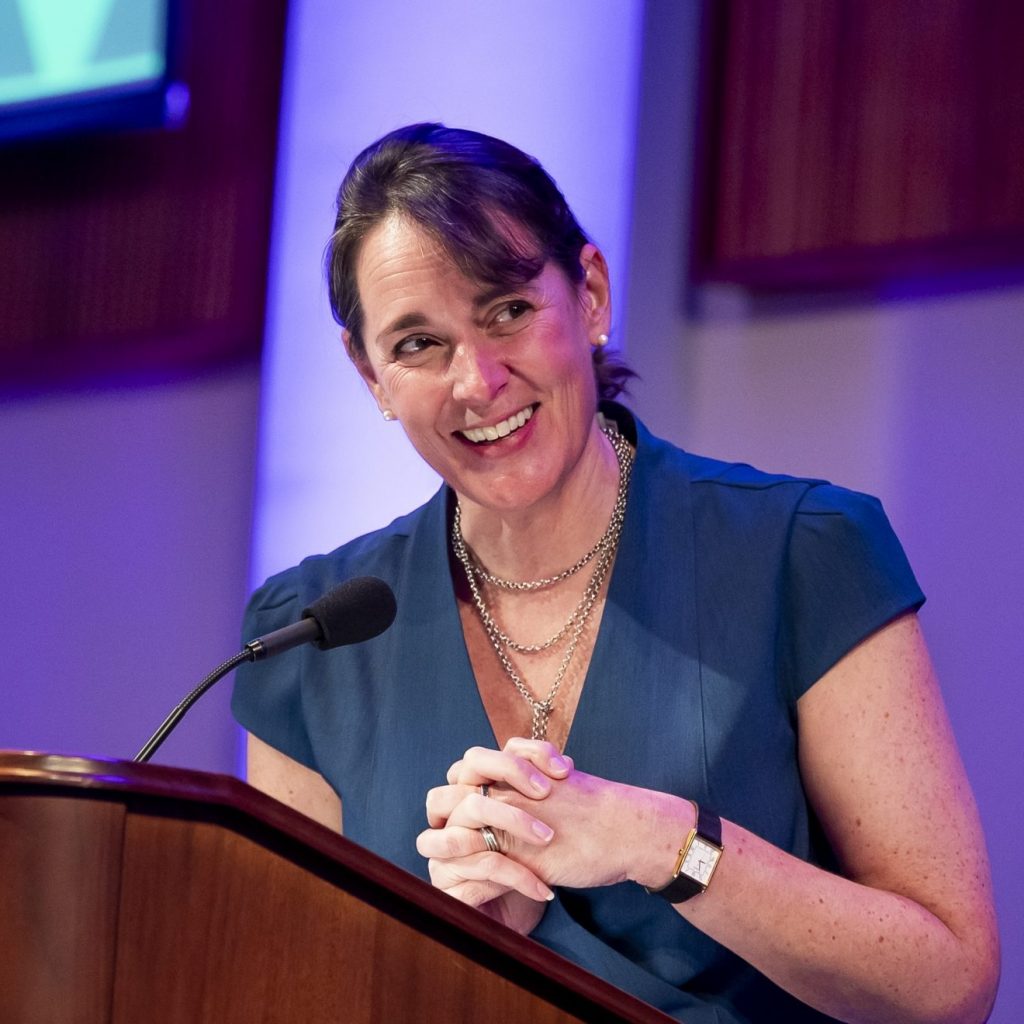
Wendy Bolger has leveraged a strong career in social innovation, technology, and corporate intrapreneurship to establish and lead the Simon Center for Innovation & Entrepreneurship at Loyola University Maryland since 2018. She is a graduate of the MBA program at the Darden Graduate School of Business, University of Virginia, where she received multiple awards for academic excellence and leadership in the field of social enterprise. Bolger has distinguished herself as an intrapreneur, frequently involved in launching new products and building innovative teams. She began her professional career at Intel as a product marketing engineer within the New Business Initiatives division. She later founded her own consulting firm, providing services in growth strategy and fundraising. At Loyola University, Bolger created and currently directs the Baltipreneurs Accelerator, a program that supports the development of startup founders by drawing on her advanced knowledge in innovation and her deep commitment to the theory of effectuation.
In 2020 she was named to Technical.ly’s inaugural RealLIST Connectors roundup of those building Baltimore’s tech, entrepreneurship, and innovation community. In 2021 she co- hosted the annual Global Consortium of Entrepreneurship Centers Conference (GCEC), joining the GCEC Board of Advisors. Wendy was among the 2022 “Women to Watch” named by the Baltimore Business Journal. After the Center was gifted a $3 million endowment to ensure its perpetuity in 2022, in 2023 the Simon Center was recognized by UpSurge for as the “Baltimore Entrepreneur Support Organization of the Year.” Loyola University, MD was ranked #4 Most Innovative School in region in 2023 by US News & World Report, and in 2024 Wendy was named “Baltimore Educator of the Year” by Technical.ly readers. The GCEC awarded the Simon Center 1st place globally for Excellence in Entrepreneurship Teaching and Pedagogical Innovation in 2024.
Workshop Effectuation
Discover Effectuation Theory – the most well-documented method in entrepreneurship! Although we are not born entrepreneurs, we can learn to think and act like one. In this workshop, students will explore the five core principles of the method:
- Available Resources (Means)
- Acceptable Loss (Affordable Loss)
- Co-Creation
- Leveraging Contingencies
- Worldview
Through interactive discussions, games, and reflection, you will learn how to apply these principles to your life and your business idea. We will work together to develop an entrepreneurial mindset focused on opportunities and solutions, using the resources you already have at your disposal. You are invited to explore the myths of entrepreneurship and build your confidence in your ability to succeed and create your own path in the entrepreneurial world!
23.03.2026, ora 12.00-15.00, Sala 120
Building Relationships & Identifying Customers
This workshop will give you the opportunity to explore how valuable relationships can be built and how to uncover the real needs of customers. It will introduce participants to the Customer Discovery methodology and the I-Corps program, used by entrepreneurs worldwide to validate business ideas. The workshop will also offer insights from Adam Grant’s research (author of Give & Take) to learn how to ask for help and build strong networks based on generosity and collaboration. You’ll practice how to engage partners, customers, and investors in an authentic and meaningful way. The session will also cover funding methods—from Friends & Family to Angel Investors and Venture Capital. You’ll receive practical advice on how to approach each type of investor and how to tailor your message to the context. This workshop helps you understand that relationships matter just as much as the idea itself. Join us to discover how to identify and develop the skills needed to gain real support for your business concept!
24.03.2026, ora 16.00-18.00, Sala 120
Artificial Intelligence for Efficiency and Innovation
This workshop offers a hands-on introduction to several AI platforms and applications currently used by entrepreneurs to create marketing materials, plan their businesses, and automate operational processes. Participants will explore the tools that startup founders rely on to optimize their time and resources, as well as to tailor their products to customer needs and investor expectations. We will analyze how selected AI solutions work, with a strong focus on their practical applicability. Attendees will learn how to integrate these technologies into their own projects and how to leverage AI to increase efficiency and the added value of their business ideas.
25.03.2026, ora 12.00-15.00, Sala 120
Pitching and Validation
The final workshop of the week is dedicated to preparing participants for presenting their business ideas. Attendees will explore Guy Kawasaki’s recommendations for crafting a compelling pitch deck and will apply these principles in an elevator pitch, regardless of the stage of their entrepreneurial initiative. Through multiple rounds of individual exercises and feedback sessions, each team will deliver a short pitch to showcase their progress. Participants will vote for their favorite ideas, and at the end, certificates will be awarded to acknowledge the skills gained throughout the program.
26.03.2026, ora 12.00-15.00, Sala 120
To reserve your sit in Ms. Wendy Bolger’s courses, complete the form.
* All students who attend the courses will receive a certificate of participation; also, the professor will award three certificates for outstanding achievements.
Amnon Dekel |17.05.2027-21.05.2027

Dr. Amnon Dekel is the Executive Director of ASPER-HUJI Innovate, the Innovation and Entrepreneurship Center at the Hebrew University of Jerusalem. Previously, Amnon was the Head of the Software Engineering Department at the Shenkar College of Engineering and Design in Israel. With over 20 years of experience in developing products for IT-based services and applications, as well as more than 15 years in applied research focused on User Experience and Mobile Computing, he has contributed to the launch of three companies in areas such as video sharing, personal networking, and indoor navigation. He has received numerous international awards, including a nomination for the Pulitzer Prize for his work with the New York Times. Amnon holds a PhD in Computer Science from Hebrew University. He is passionate about translating art into technology and dedicates his free time to this hobby.
Prototyping
This workshop offers the opportunity to explore the connection between innovation, prototyping, and protecting original ideas through intellectual property rights. Participants will learn to transform their ideas into concrete prototypes and validate them with potential customers while ensuring their creations are safeguarded against unauthorized use.
17.05.2027, ora 12.00-15.00, Sala 120
Validation
Each team will present the prototype they have created, detailing the development process and its market validation. The main stages will be highlighted, from identifying customer needs to testing the solution, including methods for collecting feedback such as interviews, surveys, or demonstrations, and how this feedback influenced improvements. Additionally, the teams will describe their innovation protection strategy, emphasizing the unique elements of the prototype and protective measures such as patents or copyrights. They will also address the risks associated with unauthorized use and the solutions implemented to minimize these risks.
18.05.2027, ora 12.00-15.00, Sala 120
Using No Code AI tools to turn your paper prototype into a working prototype
The workshop will provide participants with the opportunity to explore the process of creating a prototype and learn how to validate it with potential customers. Additionally, there will be discussions about tools that can facilitate this process, such as NOCODE systems, to create an interactive prototype. The workshop is structured in two parts, taking place over two days. The first session will begin with a theoretical introduction to prototyping, followed by the presentation of participants' prototype ideas and development plans. They will receive personalized recommendations and solutions to improve the execution of their prototype creation.
In the second session, teams will engage in the validation process of their prototypes, interacting with testers or potential customers. Through giving and receiving feedback, the solutions will be refined, preparing them for further implementation.
19.05.2026, ora 12.00-15.00, Sala 120
i.
Pentru a-ți rezerva locul la cursurile……l.
* All students who attend the courses will receive a certificate of participation; also, the professor will award three certificates for outstanding achievements.